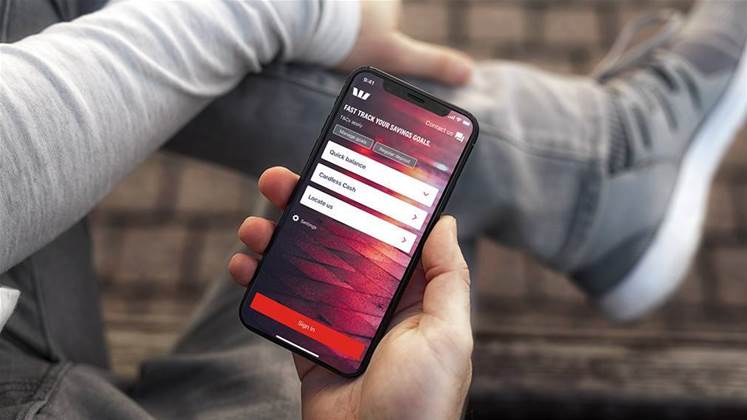
Challenge: Migrate 2.3M customers to Westpac’s new native app while maintaining NPS and driving adoption — without disrupting daily banking for millions of users.
My Role: Sub-Chapter Lead, XD Team | Led migration strategy and content transformation across 200+ digital touchpoints.
Impact: $0.5M annualised revenue increase • 7% engagement growth • NPS +9 points • 75% digital card activation rate
The Business Problem
In 2020-21, Westpac launched ION — a complete rebuild of its mobile banking app. The technical team had created excellent native apps for iOS and Android, but the go-to-market challenge was immense:
- 2.3M active users needed to migrate without friction
- 200+ help articles and videos referenced the old app and needed updating
- Multiple customer segments with different needs and migration readiness
- Tight timeline to align with product launch windows
- High risk of customer drop-off or support spikes during transition
As Sub-Chapter Lead within the XLR8/XD (Marketing and Public Sites) team, I was responsible for ensuring customers could discover, adopt, and successfully use the new app.
My Role & Key Contributions
Working across a 280-person program with 40+ rounds of user testing, I led two critical workstreams:
1. Migration Journey Design (with Digitas)
What I did: – Led cross-agency workshops to define evidence-based customer cohorts – Designed tailored migration journeys for different user scenarios (engaged users, dormant users, feature-dependent users) – Created the communications strategy and asset requirements for each cohort – Collaborated with product, marketing, and analytics teams to align on activation triggers
2. How-To Content Transformation
What I did: – Directed the audit and redesign of 200+ website pages and video content – Led the XD team in creating accessible, mobile-first instructional content – Established new content standards that saved significant agency costs – Navigated stakeholder resistance to change established processes – Ensured WCAG 2.1 compliance across all customer-facing content
Team structure: I supported the senior designer and led collaboration between our internal XD team, the Digitas agency, copywriters, producers and the ION product team.
Key Design Decisions & Trade-offs
Decision 1: Segment by behaviour, not demographics

The choice: Rather than a one-size-fits-all approach, I pushed for cohort-based migration journeys based on app usage patterns and feature dependency.
Why it mattered: Early stakeholder discussions focused on rolling out to “all iOS users” simultaneously. Through data analysis and customer research, I identified that power users, dormant users, and feature-specific users (e.g., cardless cash) had fundamentally different migration needs.
The trade-off: More complex communications plan (4 distinct journeys vs. 1) but significantly lower support risk and higher adoption rates.
Outcome: We could tailor messaging, support content, and timing for each cohort, reducing migration friction.
Decision 2: Kill the PDFs and videos (mostly)
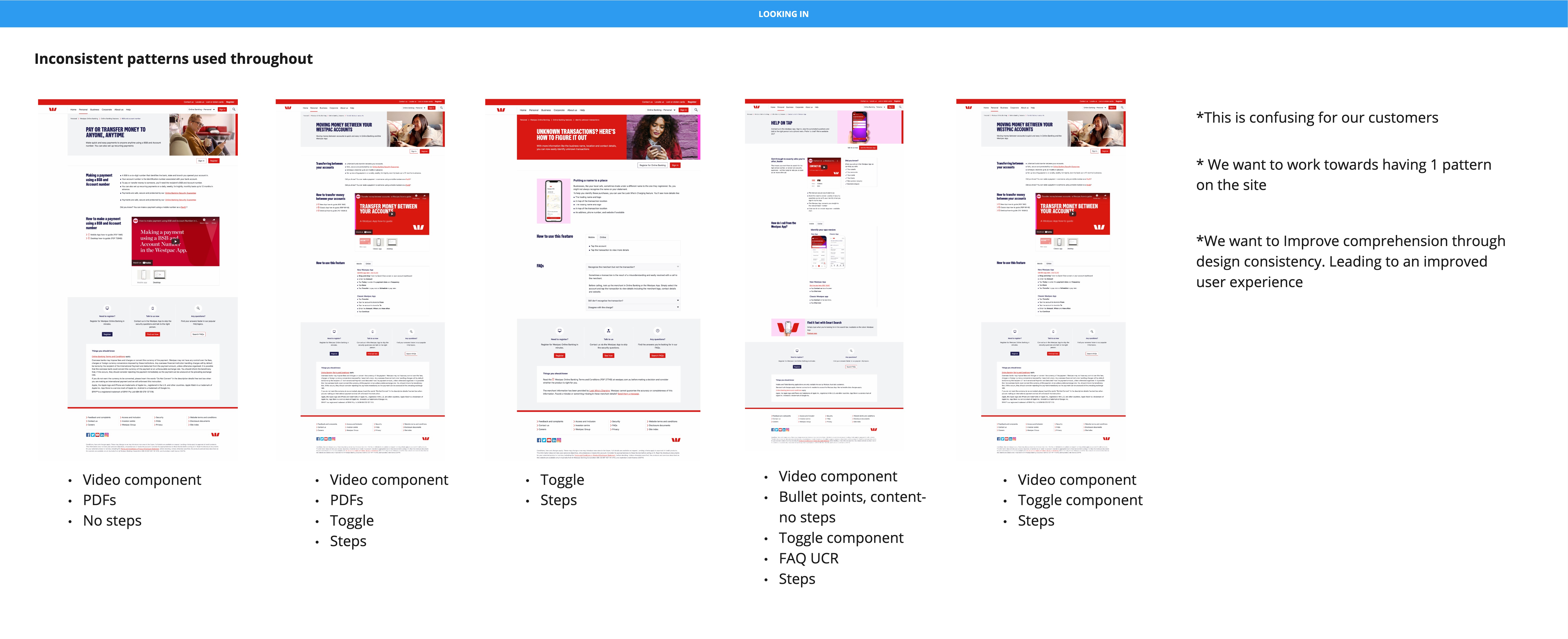
The choice: Our content audit revealed that PDFs were rarely downloaded (<2% engagement) and videos lacked transcripts, making them inaccessible and expensive to maintain.
Why it mattered: Stakeholders had already committed to producing more video content for the new app. I presented data showing this was both costly and ineffective, and advocated for simple, scannable, mobile-first HTML content instead.
The trade-off: Initial pushback from stakeholders invested in video production, but data won the argument.
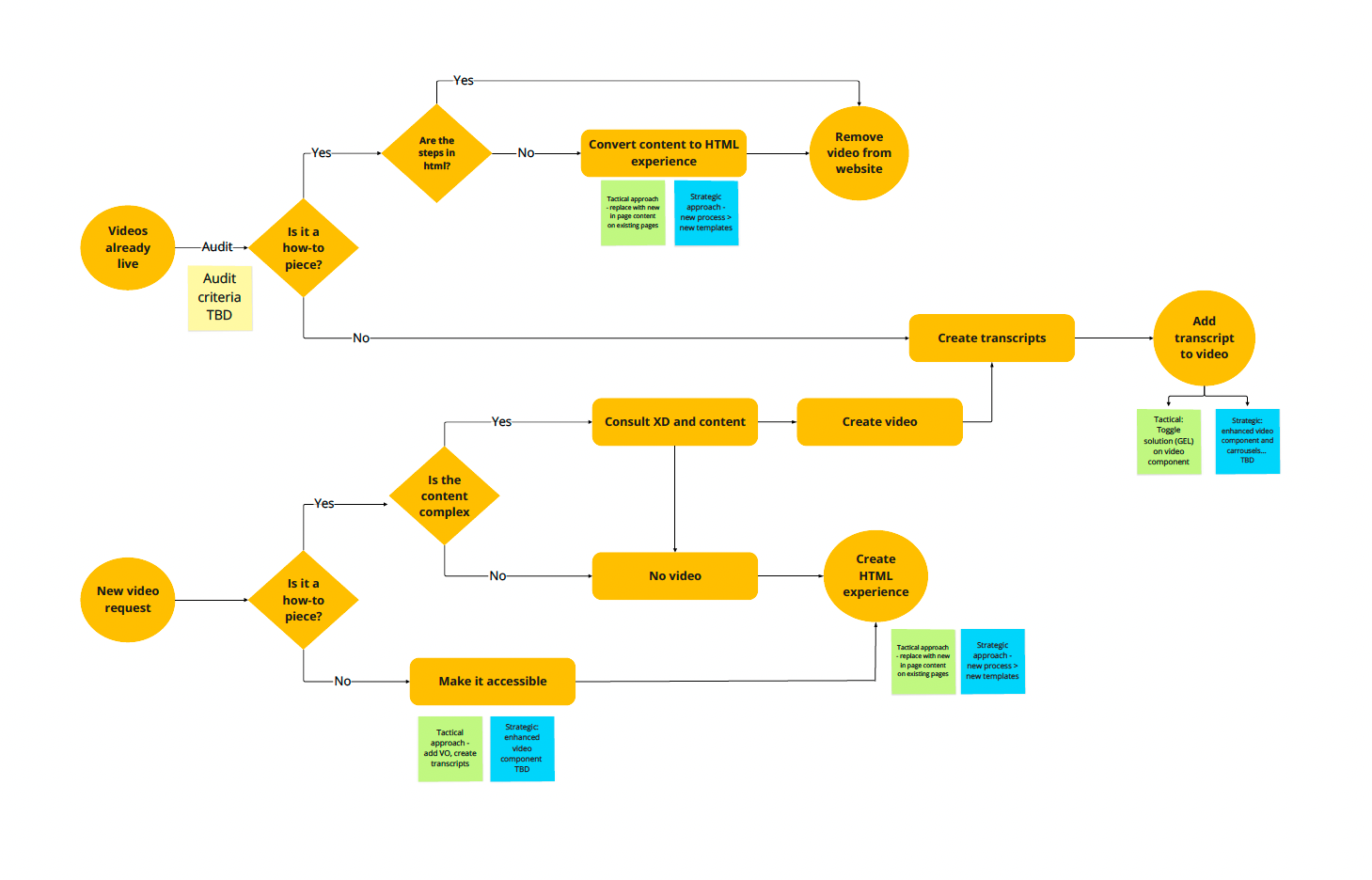
Outcome: Significant cost savings, faster content updates, and better accessibility compliance. For videos we did create, I established a scalable process with transcripts and captions built in.
Decision 3: Separate “New vs Classic” content structure during dual-app period
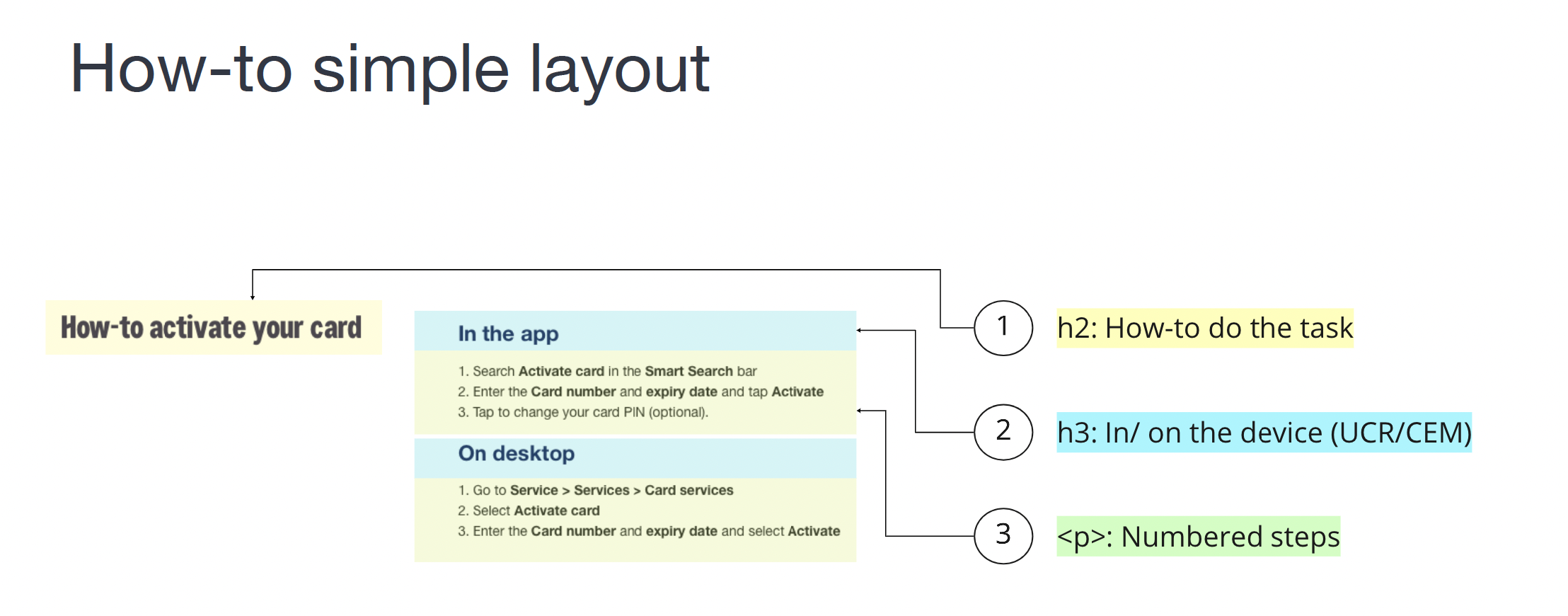

The choice: Rather than try to serve both iOS (new app) and iOS (classic app) users with the same content, I designed a branching structure that helped users detect their platform and appropriate instructions.
Why it mattered: During the iOS rollout (6+ months before Android launch), we had to support two completely different iOS app experiences simultaneously.
The trade-off: More content to manage short-term, but clearer user experience and easier long-term maintenance.
Outcome: Reduced customer confusion and support calls during the transition period.
How I Approached the Challenge
Phase 1: Understanding the Migration Ecosystem
Consolidated existing insights: – Reviewed 40 rounds of usability testing from the ION team – Analyzed customer support data to identify common pain points in previous app transitions – Mapped the current content landscape across web, app, email, and physical branches
Defined customer questions: Through research synthesis, I identified that customers had three core questions: 1. What’s changing? (clarity on new features) 2. How do I get started? (seamless onboarding) 3. What can I do with it? (awareness of capabilities)
These became the organizing principle for all migration content.
Workshop with Digitas: I led a series of workshops to: – Define customer cohorts based on app usage data – Map existing journey touchpoints – Identify gaps in the current go-to-market plan – Align on success metrics
Phase 2: Strategy & Design
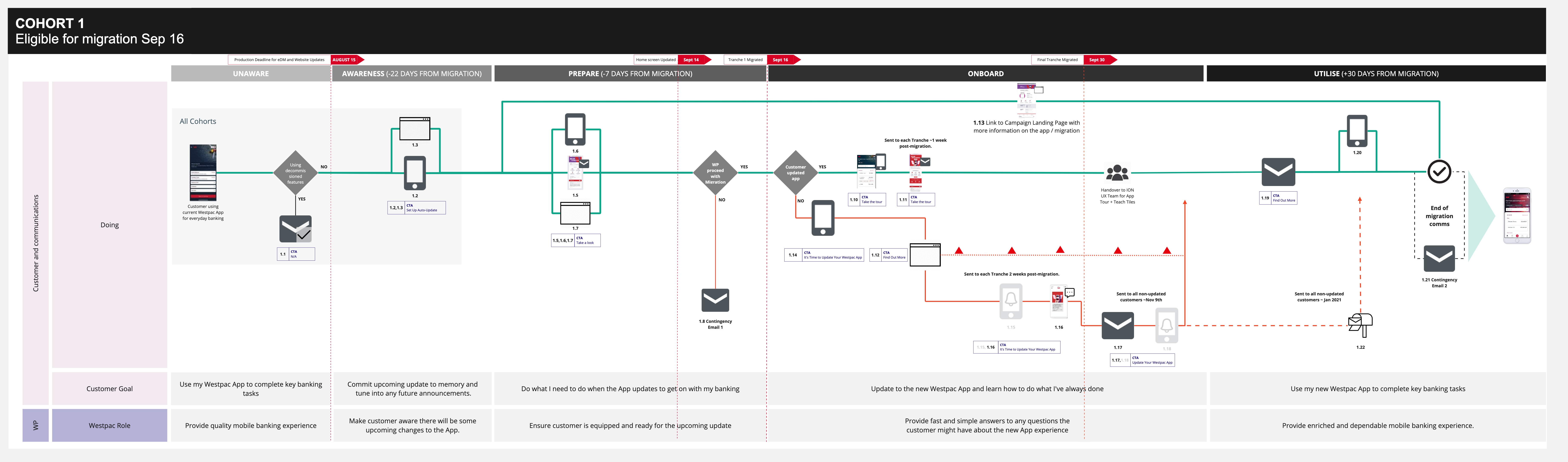
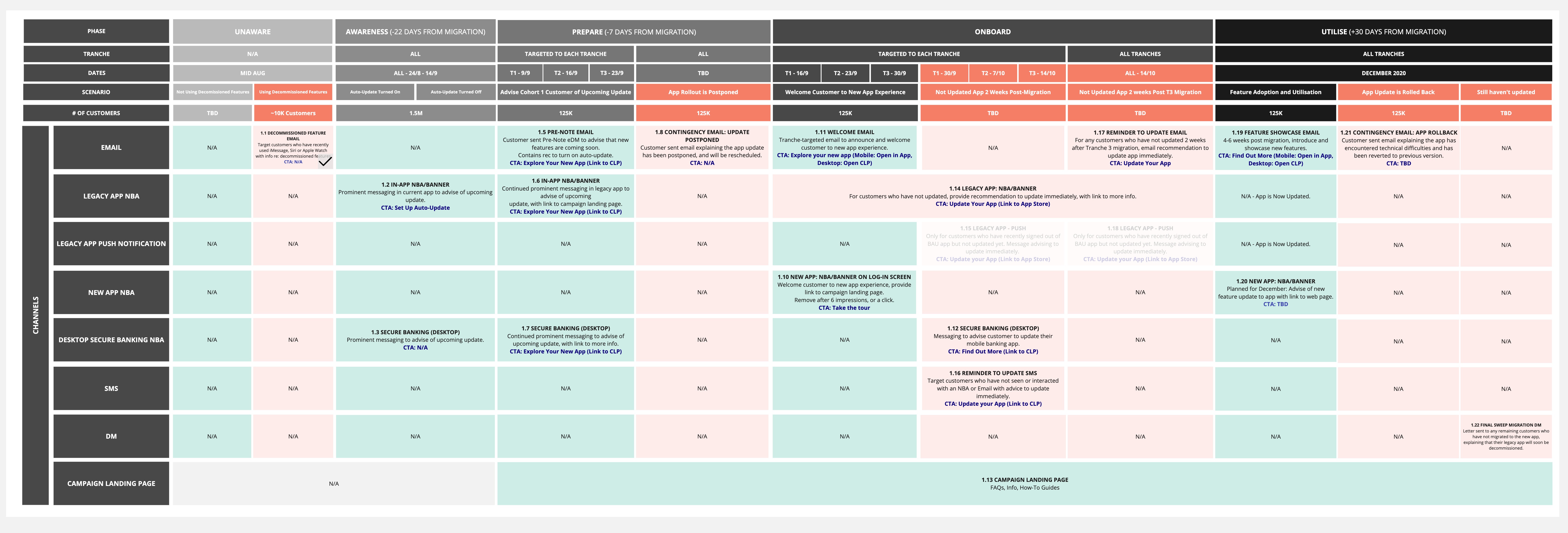
- Migration Journeys: For each cohort, I designed: – Journey maps showing pre-launch, launch day, and post-launch touchpoints – Communications plans with specific assets, channels, and timing – Escalation paths for users experiencing migration issues
- Example cohort: Engaged, feature-rich users – Pre-launch: Teaser comms highlighting new features they’d value – Launch day: In-app prompt with tutorial walkthrough – Post-launch: Feature spotlight emails driving deeper engagement – Support: Proactive FAQs addressing potential migration questions
- Content Transformation: I led the team through: – Auditing 200+ pages and categorizing by update complexity – Creating content templates for consistency (simple task, complex task, troubleshooting) – Defining the “New vs Classic” branching logic – Establishing accessibility requirements and review process – Building a content production roadmap aligned with iOS and Android launch dates


Phase 3: Execution & Iteration
What made this challenging: – Coordinating across multiple teams (ION app, marketing, customer service, legal, compliance) – Managing competing timelines (iOS launch, Android launch, content production schedules) – Balancing innovation with regulatory requirements (financial services compliance) – Educating business stakeholders on accessibility as a requirement, not a nice-to-have
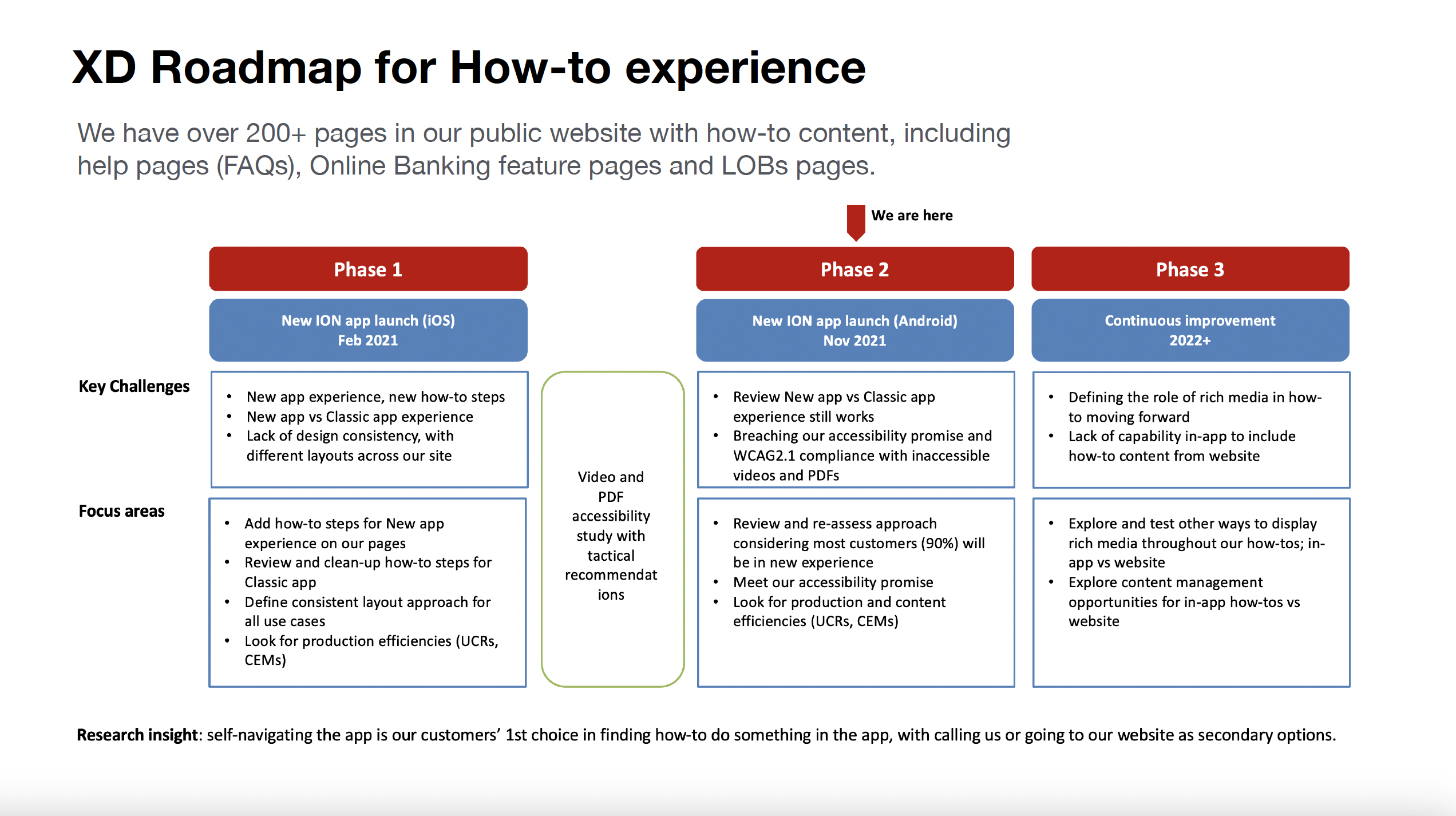
How I navigated it: – Weekly alignment meetings with ION product team to stay ahead of feature changes – Created a shared “content hub” showing all in-flight work and dependencies – Used data to defend design decisions when stakeholders pushed back – Built relationships with legal and compliance early to smooth approval processes
Results & Business Impact
Customer Impact
- iOS NPS increased from 65-70 to 74-80 following migration
- Top self-service events grew from 3.5% to 7% (customers solving problems without calling)
- Improved discoverability via better Google search rankings for help content
- Accessible, consistent experience across digital touchpoints
Business Impact
- $0.5M annualised revenue increase from mobile sales
- 7% increase in mobile app engagement (601K new app clicks/year)
- Digital card activation improved from 70% to 75%
- Significant cost savings by moving from video/PDF to scalable HTML content
What I’m Proud Of
This wasn’t just a content update — it was a service design challenge that required understanding the entire migration ecosystem. I’m particularly proud of:
- Using data to change minds: Convincing stakeholders to abandon their planned video strategy based on evidence
- Accessibility leadership: Setting a new standard for inclusive content that became a template for future work
- Cross-functional influence: Successfully coordinating across teams I didn’t directly control
- Balancing competing needs: Delivering for both business goals (revenue) and customer needs (clarity)
What I Learned & Would Do Differently
What worked well: – Cohort-based approach gave us flexibility to optimize for different user needs – Starting with customer questions (not features) kept the team focused on what mattered – Building strong relationships with compliance and legal early avoided delays later
What I’d do differently: – Push harder for A/B testing different migration message strategies (we validated designs but didn’t test messaging variations at scale) – Establish clearer content governance earlier — we figured this out mid-project when we realized multiple teams were updating the same pages – Document the migration patterns more formally as a playbook for future product launches
Skills this project strengthened: – Service design at scale (orchestrating across multiple touchpoints and teams) – Stakeholder management and influence without authority – Content strategy and information architecture – Accessibility advocacy and implementation – Data-driven decision making in ambiguous situations
Artefacts & Deliverables
Migration Strategy
- Customer cohort definitions and segmentation logic
- 4 detailed migration journey maps (one per cohort)
- Communications plans with asset counts and channel strategy
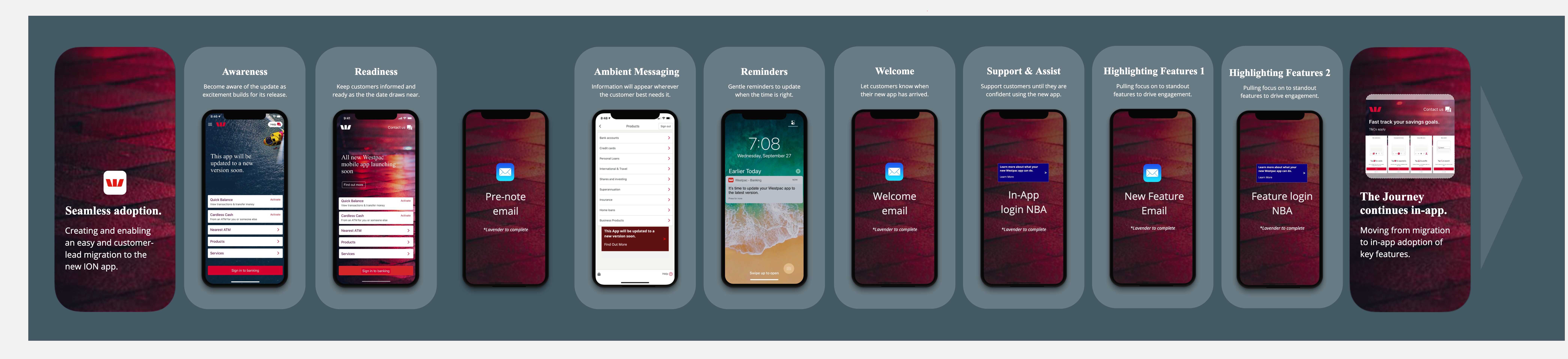
- Visual journey mockups showing customer experience across touchpoints
Content Transformation
- Content audit and categorization of 200+ pages
- Content templates and style guide
- “New vs Classic” content structure and branching logic
- Video creation process with accessibility requirements
- Mobile-first how-to page designs (simple and classic layouts)
Process & Governance
- Measurement framework (NPS, engagement, self-service rates)
- Cross-team alignment framework
- Content approval workflows
- Accessibility checklist and review process
Context: Team & Timeline
Timeline: 2020-2021 (18 months across iOS and Android launches)
My team: XLR8/XD (Marketing & Public Sites) – Service Owner – Project Manager – Digital Marketing Specialists – Business Analysts – Senior XD Designer (I supported) – Copywriter & Producers – Me: Sub-Chapter Lead
Collaborators: – ION app team (280 people across design, product, engineering) – Digitas (agency partner) – Customer service and branch teams – Legal and compliance – Analytics and insights teams
My reporting line: I reported to the Chapter Lead (Head of XD) and worked as a peer with the Digitas design lead.
 THINKRUIZ